Since I am currently a 1st grade teacher, it made sense to me to select first grade students as my audience. How could I introduce them to an electronic resource, such as the AVL, so that they can extend their learning outside of the school day? As long as they have internet access, they can connect to the AVL (Alabama Virtual Library) and hunt for information of interest to them all day and all night long. That's pretty exciting! The students don't have to be in a school building or an actual physical library to retrieve information to use to create projects or just research for fun.
Since 1st graders will likely be visiting the AVL for the first time, I tailored my presentation to meet that need. I used lots of step-by-step screen shots to show them exactly where to click and how to search. Here is my presentation.
Wednesday, March 26, 2014

Saturday, March 22, 2014
PBL #2
Here is a link to my webpage that has my second project based learning plan and rubrics liked to it. It is a 1st grade science project where we learn about conserving the Earth's resources, describing the uses of recycled materials, and collect the data on how many items we collect/sort/recycle with appropriate tools and technology. I'd also planed for our class to collaborate with the school PTA to help with he transportation of the goods to be recycled, and to then donate our earnings to a PTA school beautification project. We could also present our recordings/project at the next PTA meeting, providing an awesome authentic audience!


Blog Post #6, What can we learn about teaching and learning from Randy Pausch?
First of all, I love this "Last Lecture" and am so glad to be assigned to view it. It has been too long since I'd last viewed it. I've also read the book. Dr. Pausch is so inspiring! He had a gift for speaking and striving for goals and inspiring others to do the same. Plus, he loved Disney, so that right there = points in his favor.
He used his unique gifts and talents for lecturing to provide the world with a lesson and insight into his own life and experiences that will touch others for a long, long time. I know that personally I have been inspired, as just me, and as professional/teacher me.
Some of the things that have made the longest lasting impact from the first viewing through this one are:
The brick walls aren't there to stop me. They're there to stop those other people. The ones who'll give up. They're there, but they won't keep me from achieving my dreams. How powerful! With a mentality like that, nothing is impossible!

I also loved hearing about how he was so impressed with the products his students had created. He went to his mentor and friend and asked, "What do I do? What do I say to them? They blew me away today!" And his wise friend said to go in for the next class meeting and let them know that what they'd done was alright, but that he expected a lot more in the future. Genius! The sky is truly the limit and we as teachers don't need to lower the skyline. We should keep pushing and encouraging our students to soar even higher, because they can!
The third most impressive part to me as a teacher and person was listening to how he appreciated when his students failed, and failed big time. The goal is not to be safe, but to shoot for the stars, and be alright with failing, because as long as you don't let that stop you from pressing on, then it is not a failure at all, but a catalyst that propels you further in your creating!
Finally, we need to have fun! Life should be fun! Learning should be fun! Naturally, it is! Don't set up life so that it loses this element!
I love Dr. Pausch's inspiring words and I hope you do too. They make me laugh and cry and inspire me to be an even bigger, better, more fun version of myself, as a person and as a teacher, every time I reflect on them.
Here is the link to his last lecture video. I highly encourage you to view it if you haven't had the pleasure before. (Or watch it again if it has been a while!)
He used his unique gifts and talents for lecturing to provide the world with a lesson and insight into his own life and experiences that will touch others for a long, long time. I know that personally I have been inspired, as just me, and as professional/teacher me.
Some of the things that have made the longest lasting impact from the first viewing through this one are:
The brick walls aren't there to stop me. They're there to stop those other people. The ones who'll give up. They're there, but they won't keep me from achieving my dreams. How powerful! With a mentality like that, nothing is impossible!

I also loved hearing about how he was so impressed with the products his students had created. He went to his mentor and friend and asked, "What do I do? What do I say to them? They blew me away today!" And his wise friend said to go in for the next class meeting and let them know that what they'd done was alright, but that he expected a lot more in the future. Genius! The sky is truly the limit and we as teachers don't need to lower the skyline. We should keep pushing and encouraging our students to soar even higher, because they can!
The third most impressive part to me as a teacher and person was listening to how he appreciated when his students failed, and failed big time. The goal is not to be safe, but to shoot for the stars, and be alright with failing, because as long as you don't let that stop you from pressing on, then it is not a failure at all, but a catalyst that propels you further in your creating!
Finally, we need to have fun! Life should be fun! Learning should be fun! Naturally, it is! Don't set up life so that it loses this element!
I love Dr. Pausch's inspiring words and I hope you do too. They make me laugh and cry and inspire me to be an even bigger, better, more fun version of myself, as a person and as a teacher, every time I reflect on them.
Here is the link to his last lecture video. I highly encourage you to view it if you haven't had the pleasure before. (Or watch it again if it has been a while!)
Tuesday, March 18, 2014
PBL #1
For our first PBL group assignment, we created a project where 1st grade children would work as a group, select a Dr. Seuss story, read and note key details (such as characters, setting, problem, solution, feeling words, etc.) and then relate characteristics of these characters to themselves. They would have to base their opinions off of examples from the text. Then, using technology, they would create a project that showed these details, their opinions, the examples from the text, and how it related to them.
Here is a link to my website which has links to the Google Docs for PBL #1 and the rubrics on it.
Link to my web page here.

Here is a link to my website which has links to the Google Docs for PBL #1 and the rubrics on it.
Link to my web page here.

Wednesday, March 12, 2014
Asking Questions
This is a topic that has been on my mind several times this academic year. I am part of a math focus team at my elementary school, and one of our big focuses has been on 'talk moves' and asking quality questions. When good discussion is taking place, the atmosphere in a classroom is energized, filled with student led learning taking place, and allowing the teacher to step back and take in the differing depths of understanding showing in the students. This is the goal! We want to create classroom environments where the students not only participate in discussions in response to the teachers prompting questions, but by sparking their own discussions with questions of their own.
We first have to establish a classroom climate and expectation that we are all the teachers. We are all in charge of our learning and participating in learning activities that further our understanding of the material being covered. This can be done in an orderly way. I think that sometimes, especially in younger grades like 1st grade where the students can get excited and hyper rather quickly, teachers fear having the discussions as a major part of the lesson plan. Maybe they fear not having control of the group, or not being able to cover what they want/need to, or perhaps they never saw classroom questioning and discussions taking place so they just don't know how to implement this in their rooms yet. To this fear I would say, risk it! You never know until you try, and I can say from experience that the quality of learning taking place in my classroom now that the students are comfortable contributing, asking their own questions, adding on to a friends thought, clarifying, etc. is far higher now than it ever was when it was mainly me talking and thinking naively that they were all getting what I was saying.
Learning takes place when you teach. This is especially evident to me with math. I have become much more confident with my own math abilities since I became a teacher and through explaining to others how or why something worked, I noticed patterns and familiarized myself with it to an extent that I 'know' it now. Well, offer the students that same opportunity! Let them teach it! Let them ask questions, let them answer, show other ways of solving problems, use lots of different tools to solve problems, add on to friends ideas, and contribute to the learning taking place. When they are the ones explaining and in control, they are 'owning' it. Plus, it lets you know very clearly who has it, who is struggling, and who has surprised you with yet another unique way of solving a problem!
All of this builds on setting up the atmosphere for a classroom climate that expects full participation from all, and is founded on good questioning and discussion methods. I agree with Dr. Maryellen Weimer, author of "Three Ways to Ask Better Questions in the Classroom." It is important to plan good questions ahead of time, versus just relying on coming up with clear, deep questions to surface at the time of the lesson. Planning ahead allows you to ensure that the questions you ask are not only clear and understandable, but that they ask for deeper levels of response (avoiding the simple, 'yes' and 'no' responses). I also like her suggestion to not answer all questions right away. For, that triggers other students to shut down because a response has been given. Either have some questions that aren't answered until the end, or allow all students to write their own responses so that they contribute before they answer aloud, or practice with the students so that they know that one response won't cut it, and that way they stay tuned in.
I love her last two lines, "Eventually students may start asking better questions themselves, including ones that we can't answer. And those are the best questions of all." That is the goal! We want children who are thinking, actively engaged, answering our well thought out questions, and even asking questions of their own.

Works Cited:
Weimer, M. (2012, June 27). Faculty Focus: Higher Ed Teaching Strategies from Magna Publications. Three Ways to Ask Better Questions in the Classroom.
We first have to establish a classroom climate and expectation that we are all the teachers. We are all in charge of our learning and participating in learning activities that further our understanding of the material being covered. This can be done in an orderly way. I think that sometimes, especially in younger grades like 1st grade where the students can get excited and hyper rather quickly, teachers fear having the discussions as a major part of the lesson plan. Maybe they fear not having control of the group, or not being able to cover what they want/need to, or perhaps they never saw classroom questioning and discussions taking place so they just don't know how to implement this in their rooms yet. To this fear I would say, risk it! You never know until you try, and I can say from experience that the quality of learning taking place in my classroom now that the students are comfortable contributing, asking their own questions, adding on to a friends thought, clarifying, etc. is far higher now than it ever was when it was mainly me talking and thinking naively that they were all getting what I was saying.
Learning takes place when you teach. This is especially evident to me with math. I have become much more confident with my own math abilities since I became a teacher and through explaining to others how or why something worked, I noticed patterns and familiarized myself with it to an extent that I 'know' it now. Well, offer the students that same opportunity! Let them teach it! Let them ask questions, let them answer, show other ways of solving problems, use lots of different tools to solve problems, add on to friends ideas, and contribute to the learning taking place. When they are the ones explaining and in control, they are 'owning' it. Plus, it lets you know very clearly who has it, who is struggling, and who has surprised you with yet another unique way of solving a problem!
All of this builds on setting up the atmosphere for a classroom climate that expects full participation from all, and is founded on good questioning and discussion methods. I agree with Dr. Maryellen Weimer, author of "Three Ways to Ask Better Questions in the Classroom." It is important to plan good questions ahead of time, versus just relying on coming up with clear, deep questions to surface at the time of the lesson. Planning ahead allows you to ensure that the questions you ask are not only clear and understandable, but that they ask for deeper levels of response (avoiding the simple, 'yes' and 'no' responses). I also like her suggestion to not answer all questions right away. For, that triggers other students to shut down because a response has been given. Either have some questions that aren't answered until the end, or allow all students to write their own responses so that they contribute before they answer aloud, or practice with the students so that they know that one response won't cut it, and that way they stay tuned in.
I love her last two lines, "Eventually students may start asking better questions themselves, including ones that we can't answer. And those are the best questions of all." That is the goal! We want children who are thinking, actively engaged, answering our well thought out questions, and even asking questions of their own.

Works Cited:
Weimer, M. (2012, June 27). Faculty Focus: Higher Ed Teaching Strategies from Magna Publications. Three Ways to Ask Better Questions in the Classroom.
Sunday, March 9, 2014
C4T Rotating #1
C4T Rotating #1:
I read a post made by Tony Baldasaro which was about a typical Monday administrative meeting where the administration team all put their heads together and discuss all sorts of aspects, but always try to incorporate their philosophy into the discussions to keep the mission as their focus. This particular Monday meeting was particularly relevant to him because as the discussion was plugging along (and the normal distractors made their way into the conversation. . . things like state testing scores, board approval, funding, etc.) the administrator said 9 simple words that brought the conversation back into focus. Those 9 words were, "But, If we're really going to change the world. . ." and Tony was so impressed that with 9 simple words the whole point of it all was brought back into main focus.
In my reply I introduced myself and included a link to EDM510's blog page as well as my blog page. I mentioned that I was hoping to discover that through blogging we could be changing the world through good communication not limited by location or distance. I mentioned that we would be commenting on young student's blogs beginning next week and that this shows to be motivational and affirming to the students, encouraging them to care and write even more and with better effort. This, I mentioned, is a bit of that change that we hope to see in the world.
I asked him to share what some of the suggestions or thoughts were that followed those 9 powerful words. I asked if there were any 1st grade thoughts that he could share with me, since I'm currently a 1st grade teacher. I'm excited to follow him for 3 weeks and see what sort of correspondence we develop.
Here is a link to his post: (click here)

C4T Rotating week 2:
This week I was able to view on a post from the Port England School which had a video made by Google to highlight how using Google and Google Docs in particular has made a big impact in their learning. The video is less than 2 minutes, but it is packed full of insight and exciting possibilities. I enjoyed seeing the community brought together to have learning taking place all the time, versus only when in the school building.
I commented as much in my post. I also stated that I liked the statement that was made which said that when children have access to the internet, the have the ability to manage their own learning. I thought, what a powerful statement! I wondered what the students there that now have the technology and access to the internet, so the tools and the know how, what have they pursued learning? I'm curious to see if they have data on that and if so, what it shows.
This should be a link to the video if you'd like to watch it yourself. Below is an image of the video. Here is a link to their webpage which has the video on it as well: (click here)

C4T Rotating week 3:
This week I visited John T. Spencer's blog and read his post about "close reading," a reading strategy that has been the talk of the year for many teachers in many schools. Many teachers hate it! He presents this strategy in a way to be used as a tool during other learning activities, not to be used as the sole reason for reading or the objective of the reading lesson. Using close reading for the sake of close reading is of course going to inspire loathing from teachers as well as students. Rather, if in use as a strategy when participating in something engaging and still interest based/student led, then it can be a powerful tool.
I asked if his thoughts were expressed to administrators, and if so, what were their reactions? It makes good sense to me. Still, I know that many teachers do feel the pressure of having to have this strategy in use as evidence for administrators to see on walk throughs, etc. and this likely leads to overuse and what he referred to in his post.
Here is a link to his blog post: (click here)

February 26, 2014
The blog I visited was discussing something very similar to what the last student whose blog I visited this week discussed. How we need to not be biased and unwilling to think from the other side's point of view in educational areas and in all areas. The student spoke using dirt bikes as an example, whereas the educator spoke on whole words versus phonics, math facts and procedures versus problem solving, project based learning versus traditional teach and assess methods, etc. and other school related debates. How interesting that as a professional adult, we are recognizing and discussing on adult levels the same concerns that a seventh grader expressed on a 7th grade level.
I asked him the same question. How did he suggest we move past only thinking one way, and diplomatically move into conversations of consequence, where we can recognize good points from both sides and use all aspects to enhance our teaching styles?

March 9, 2014
The post that I read this week was titled, "You have permission to be strict." It discussed how sometimes students confuse being strict with being mean, and the post discussed the differences between the two. Being strict is not mean (selfish, angry, cutting, etc.) rather, it is having high expectations and keeping the reigns tight to help the students focus as they learn, etc. I appreciated the post because it is something that all teachers I'm sure struggle with. Am I being too strict? Are my students happy? Etc. But, as I shared with my reply, I have found that in my own classroom, the more strict and consistent I am, the more at peace, well performing, and happier my class is. So, it's me affirming him, and him affirming me with the post this week. :)
Here is his post and my response.
I read a post made by Tony Baldasaro which was about a typical Monday administrative meeting where the administration team all put their heads together and discuss all sorts of aspects, but always try to incorporate their philosophy into the discussions to keep the mission as their focus. This particular Monday meeting was particularly relevant to him because as the discussion was plugging along (and the normal distractors made their way into the conversation. . . things like state testing scores, board approval, funding, etc.) the administrator said 9 simple words that brought the conversation back into focus. Those 9 words were, "But, If we're really going to change the world. . ." and Tony was so impressed that with 9 simple words the whole point of it all was brought back into main focus.
In my reply I introduced myself and included a link to EDM510's blog page as well as my blog page. I mentioned that I was hoping to discover that through blogging we could be changing the world through good communication not limited by location or distance. I mentioned that we would be commenting on young student's blogs beginning next week and that this shows to be motivational and affirming to the students, encouraging them to care and write even more and with better effort. This, I mentioned, is a bit of that change that we hope to see in the world.
I asked him to share what some of the suggestions or thoughts were that followed those 9 powerful words. I asked if there were any 1st grade thoughts that he could share with me, since I'm currently a 1st grade teacher. I'm excited to follow him for 3 weeks and see what sort of correspondence we develop.
Here is a link to his post: (click here)

C4T Rotating week 2:
This week I was able to view on a post from the Port England School which had a video made by Google to highlight how using Google and Google Docs in particular has made a big impact in their learning. The video is less than 2 minutes, but it is packed full of insight and exciting possibilities. I enjoyed seeing the community brought together to have learning taking place all the time, versus only when in the school building.
I commented as much in my post. I also stated that I liked the statement that was made which said that when children have access to the internet, the have the ability to manage their own learning. I thought, what a powerful statement! I wondered what the students there that now have the technology and access to the internet, so the tools and the know how, what have they pursued learning? I'm curious to see if they have data on that and if so, what it shows.
This should be a link to the video if you'd like to watch it yourself. Below is an image of the video. Here is a link to their webpage which has the video on it as well: (click here)

C4T Rotating week 3:
This week I visited John T. Spencer's blog and read his post about "close reading," a reading strategy that has been the talk of the year for many teachers in many schools. Many teachers hate it! He presents this strategy in a way to be used as a tool during other learning activities, not to be used as the sole reason for reading or the objective of the reading lesson. Using close reading for the sake of close reading is of course going to inspire loathing from teachers as well as students. Rather, if in use as a strategy when participating in something engaging and still interest based/student led, then it can be a powerful tool.
I asked if his thoughts were expressed to administrators, and if so, what were their reactions? It makes good sense to me. Still, I know that many teachers do feel the pressure of having to have this strategy in use as evidence for administrators to see on walk throughs, etc. and this likely leads to overuse and what he referred to in his post.
Here is a link to his blog post: (click here)

February 26, 2014
The blog I visited was discussing something very similar to what the last student whose blog I visited this week discussed. How we need to not be biased and unwilling to think from the other side's point of view in educational areas and in all areas. The student spoke using dirt bikes as an example, whereas the educator spoke on whole words versus phonics, math facts and procedures versus problem solving, project based learning versus traditional teach and assess methods, etc. and other school related debates. How interesting that as a professional adult, we are recognizing and discussing on adult levels the same concerns that a seventh grader expressed on a 7th grade level.
I asked him the same question. How did he suggest we move past only thinking one way, and diplomatically move into conversations of consequence, where we can recognize good points from both sides and use all aspects to enhance our teaching styles?

March 9, 2014
The post that I read this week was titled, "You have permission to be strict." It discussed how sometimes students confuse being strict with being mean, and the post discussed the differences between the two. Being strict is not mean (selfish, angry, cutting, etc.) rather, it is having high expectations and keeping the reigns tight to help the students focus as they learn, etc. I appreciated the post because it is something that all teachers I'm sure struggle with. Am I being too strict? Are my students happy? Etc. But, as I shared with my reply, I have found that in my own classroom, the more strict and consistent I am, the more at peace, well performing, and happier my class is. So, it's me affirming him, and him affirming me with the post this week. :)
Here is his post and my response.
C4T semester long assignment
C4T assigned week 1:
Here is a link to Dr. Fryer's blog.
I spent lots of time perusing Dr. Fryer's page. I feel like Dr. Strange paired me up with the perfect person to follow. Already in one evening I am thinking differently about how technology could look in my 1st grade classroom. This is really exciting! I am really optimistic that through following his posts (He's on Twitter too) that I will learn and incorporate a lot of technology into my routine at school.
Of course I introduced myself and included links to EDM510 and to my personal blog in my initial post. I also commented on his topic of the post which was visual note taking. How neat! I've seen short clips done through this style, and I've been so engaged during them, never once thinking that this could be a technique that I introduce and use with my students to help them record information and tell stories, etc. How exciting! He has lots of links on his posts, so I look forward to going back and exploring them further.
The question I asked in my response was, "If you could introduce me to one new way/method of incorporating technology that I could take and implement in my classroom tomorrow, what would it be and why?" I'm excited to see what he responds back with! :)

February 15, 2014, week 2
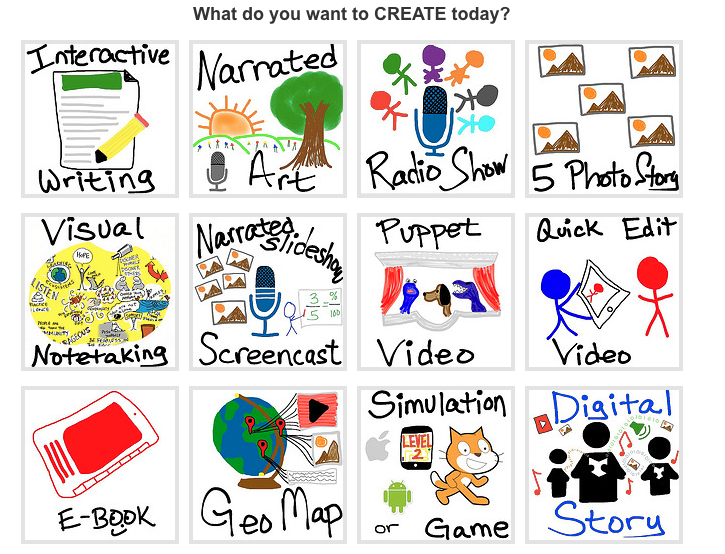
In Dr. Fryer's last post, he introduced some professional development opportunities that are coming up soon. They will be presented via video-conferencing for the next 7 weeks on Thursday evenings. The topics covered will be: Quick Edit Videos, E-books, and Simulations or Games. It is a new course, a part 2 to a previous course covering other technology based learning tools.
I asked if this was something that could be taken without having taken the part 1 course before. I also asked if these were tools that he could see being fruitfully used in a 1st grade classroom where the student teacher ratio is 20+ to 1, or were these tools more appropriate for older students (3rd grade and higher). I'm curious to hear his thoughts.
Week 3, February 22, 2014:
Dr. Fryer was not only commending the last'EDCampOKC' he recently attended in his last post, but he was also talking about Twitter and ways to use it well. He said that while he normally blogs about such meetings and conferences, he finds it useful to tweet during them, linking good information and thoughts as they are being shared. He has formed tweet groups, and they will meet at scheduled times and chat, etc. It sounds like Twitter being used for educational purposes with a strong PLN aspect to it. He also cautioned about the good tweet links/info being lost due to so many at one time. He has a solution though: 'Storify' such sessions, so that you save this information and don't lose it, but can go back and check it out later again. The question I asked was did he have a good suggestion for a brief tutorial on "storify" or how to create "tweet nests?"

Dr. Fryer responded back already! Here is what he shared with me for "Storify" , and here is a link for his response to creating a "twitter nest." How cool to get such a great, thorough response. Whoop-whoop! :)
February 28, 2014
This week Dr. Fryer posted his slide show that he is using at a Missouri technology workshop. I took the time to go through all 79 slides, and even though I didn't attend the conference or hear his talk that went with the images, I was still able to gather from the images about what he discussed. It went along with the theme of his recent book, which gives practical ways to bring technology into the classroom. I found one thing he wrote to be quite powerful. He said, "Digital Literacy today means much more than surfing the internet and using Microsoft Office." This is a big way that I try to incorporate technology into my first grade room, so now the challenge has been made. Do more, because that's not enough to prepare your students to be digitally literate anymore.

Here is a link to Dr. Fryer's blog.
I spent lots of time perusing Dr. Fryer's page. I feel like Dr. Strange paired me up with the perfect person to follow. Already in one evening I am thinking differently about how technology could look in my 1st grade classroom. This is really exciting! I am really optimistic that through following his posts (He's on Twitter too) that I will learn and incorporate a lot of technology into my routine at school.
Of course I introduced myself and included links to EDM510 and to my personal blog in my initial post. I also commented on his topic of the post which was visual note taking. How neat! I've seen short clips done through this style, and I've been so engaged during them, never once thinking that this could be a technique that I introduce and use with my students to help them record information and tell stories, etc. How exciting! He has lots of links on his posts, so I look forward to going back and exploring them further.
The question I asked in my response was, "If you could introduce me to one new way/method of incorporating technology that I could take and implement in my classroom tomorrow, what would it be and why?" I'm excited to see what he responds back with! :)
February 15, 2014, week 2
In Dr. Fryer's last post, he introduced some professional development opportunities that are coming up soon. They will be presented via video-conferencing for the next 7 weeks on Thursday evenings. The topics covered will be: Quick Edit Videos, E-books, and Simulations or Games. It is a new course, a part 2 to a previous course covering other technology based learning tools.
I asked if this was something that could be taken without having taken the part 1 course before. I also asked if these were tools that he could see being fruitfully used in a 1st grade classroom where the student teacher ratio is 20+ to 1, or were these tools more appropriate for older students (3rd grade and higher). I'm curious to hear his thoughts.
Week 3, February 22, 2014:
Dr. Fryer was not only commending the last'EDCampOKC' he recently attended in his last post, but he was also talking about Twitter and ways to use it well. He said that while he normally blogs about such meetings and conferences, he finds it useful to tweet during them, linking good information and thoughts as they are being shared. He has formed tweet groups, and they will meet at scheduled times and chat, etc. It sounds like Twitter being used for educational purposes with a strong PLN aspect to it. He also cautioned about the good tweet links/info being lost due to so many at one time. He has a solution though: 'Storify' such sessions, so that you save this information and don't lose it, but can go back and check it out later again. The question I asked was did he have a good suggestion for a brief tutorial on "storify" or how to create "tweet nests?"

Dr. Fryer responded back already! Here is what he shared with me for "Storify" , and here is a link for his response to creating a "twitter nest." How cool to get such a great, thorough response. Whoop-whoop! :)
February 28, 2014
This week Dr. Fryer posted his slide show that he is using at a Missouri technology workshop. I took the time to go through all 79 slides, and even though I didn't attend the conference or hear his talk that went with the images, I was still able to gather from the images about what he discussed. It went along with the theme of his recent book, which gives practical ways to bring technology into the classroom. I found one thing he wrote to be quite powerful. He said, "Digital Literacy today means much more than surfing the internet and using Microsoft Office." This is a big way that I try to incorporate technology into my first grade room, so now the challenge has been made. Do more, because that's not enough to prepare your students to be digitally literate anymore.

C4T my choice
C4T my choice #1
I chose to follow Deb Frazier, a first grade teacher and blogger (click here to visit her page), whose 1st grade website excited me tremendously. As a 1st grade teacher, one of my main goals for this class, and for my developing technology PDP, is to increase the amount of technology use in my classroom. Yet, I don't want to do technology for technology's sake; rather, I want to teach in more effective ways and allow my students to become more prepared for the technologically rich world that they live in. I want them to create using technology, and I know that using technology will only help me facilitate strong learning, exploration and creation while engaging my students. . . if done right. Well, this teacher's website made me think, she is doing it right! She's not only on my grade level, but she is meeting and exceeding standards by using technology in 1st grade friendly ways and sharing about it. Her own blog seems great as well.
I introduced myself with my first comment, included the link for EDM510USA and for my own blog page, and then discussed her post. She had written about going into an enchanting book store and purchasing some new books for her class. She limited herself to three, and then wrote a bit of a teaser for each title. I am really curious to see how the last book, the one about the good wolf, turns out. She wondered if her students would predict the ending or be as surprised as she was with what happened. I asked her to share their reactions, and asked which of the three new books her first graders preferred. Perhaps I'll need to get a copy for my classroom library.
Here is a screen shot image from her blog. Doesn't this book look and sound so perfectly intriguing?

February 15, 2014, week 2
I read a post that was very positive written by Deb that celebrated different things. She celebrated personal things (like her 34th anniversary with her husband, her daughters recent successes, etc.) but she also celebrated school related news. For one thing, they had 4 days of school this week. They've been having less because of snow. So, that was exciting as well as exhausting for her! She also had parent-teacher conferences take place. She mentioned that she really enjoys this, even though it means more time outside of school, later hours, and more work-- because it is so great to get a more full picture of the child that the parents bring. She loves hearing about the "different child" that lives at home; and she loves sharing with the parents about the "different child" that is in her classroom during the week.
I find this teacher very easy to relate to. I also enjoy parent teacher conferences because I think it's a strength of mine. I feel it is important to affirm for the parent that their child is wonderful. Even with the most difficult student, I can do that, because even the most difficult student has qualities that are unique and contribute to the class positively in various ways. I feel that during such meetings a stronger home-school connection is established, and I think this is one of the most important aspects for a child's success in school. When the student sees that education is important to mom/dad, then he/she will view it as important too. Thus, he/she will put in more effort to achieve in school.
I asked her what other ways she maintained a strong home-school connection, and I asked if the students see this communication taking place.

Week 3 post, February 22, 2014
I had to go back a few weeks to see a new post today because she hadn't posted this week. I loved what I came across. Deb talked about coming back from winter break as the beginning of the school year, looking for a fresh start. She incorporated the students on this process. She asked them for input on what they would like to tweak to make better. Their discussion and the reasons behind their suggestions were impressive. Together, they worked to make the changes. The next day she had a slide show with the changes and reasons for them labeled which really excited the students. It gave them ownership of the classroom, making it their space for their creative needs. How cool!
I wondered what my students would suggest if I posed the same question to them? What can we do to improve our room? Why? What discussion would arise? What reasons would back their thoughts? I think we need to do it! :)

February 28, 2014
I went back on Deb Frazier's blog and read how she'd won the Sunshine Blog award. She was nominated by a fellow blogger, asked to share 11 interesting things about herself, and then asked 11 questions of some other bloggers. I thought, this is a fun way to encourage good blogging and to develop your PLN. Perhaps as we develop our own PLN's I can become connected enough with others that we participate in such an activity?

I chose to follow Deb Frazier, a first grade teacher and blogger (click here to visit her page), whose 1st grade website excited me tremendously. As a 1st grade teacher, one of my main goals for this class, and for my developing technology PDP, is to increase the amount of technology use in my classroom. Yet, I don't want to do technology for technology's sake; rather, I want to teach in more effective ways and allow my students to become more prepared for the technologically rich world that they live in. I want them to create using technology, and I know that using technology will only help me facilitate strong learning, exploration and creation while engaging my students. . . if done right. Well, this teacher's website made me think, she is doing it right! She's not only on my grade level, but she is meeting and exceeding standards by using technology in 1st grade friendly ways and sharing about it. Her own blog seems great as well.
I introduced myself with my first comment, included the link for EDM510USA and for my own blog page, and then discussed her post. She had written about going into an enchanting book store and purchasing some new books for her class. She limited herself to three, and then wrote a bit of a teaser for each title. I am really curious to see how the last book, the one about the good wolf, turns out. She wondered if her students would predict the ending or be as surprised as she was with what happened. I asked her to share their reactions, and asked which of the three new books her first graders preferred. Perhaps I'll need to get a copy for my classroom library.
Here is a screen shot image from her blog. Doesn't this book look and sound so perfectly intriguing?

February 15, 2014, week 2
I read a post that was very positive written by Deb that celebrated different things. She celebrated personal things (like her 34th anniversary with her husband, her daughters recent successes, etc.) but she also celebrated school related news. For one thing, they had 4 days of school this week. They've been having less because of snow. So, that was exciting as well as exhausting for her! She also had parent-teacher conferences take place. She mentioned that she really enjoys this, even though it means more time outside of school, later hours, and more work-- because it is so great to get a more full picture of the child that the parents bring. She loves hearing about the "different child" that lives at home; and she loves sharing with the parents about the "different child" that is in her classroom during the week.
I find this teacher very easy to relate to. I also enjoy parent teacher conferences because I think it's a strength of mine. I feel it is important to affirm for the parent that their child is wonderful. Even with the most difficult student, I can do that, because even the most difficult student has qualities that are unique and contribute to the class positively in various ways. I feel that during such meetings a stronger home-school connection is established, and I think this is one of the most important aspects for a child's success in school. When the student sees that education is important to mom/dad, then he/she will view it as important too. Thus, he/she will put in more effort to achieve in school.
I asked her what other ways she maintained a strong home-school connection, and I asked if the students see this communication taking place.

Week 3 post, February 22, 2014
I had to go back a few weeks to see a new post today because she hadn't posted this week. I loved what I came across. Deb talked about coming back from winter break as the beginning of the school year, looking for a fresh start. She incorporated the students on this process. She asked them for input on what they would like to tweak to make better. Their discussion and the reasons behind their suggestions were impressive. Together, they worked to make the changes. The next day she had a slide show with the changes and reasons for them labeled which really excited the students. It gave them ownership of the classroom, making it their space for their creative needs. How cool!
I wondered what my students would suggest if I posed the same question to them? What can we do to improve our room? Why? What discussion would arise? What reasons would back their thoughts? I think we need to do it! :)

February 28, 2014
I went back on Deb Frazier's blog and read how she'd won the Sunshine Blog award. She was nominated by a fellow blogger, asked to share 11 interesting things about herself, and then asked 11 questions of some other bloggers. I thought, this is a fun way to encourage good blogging and to develop your PLN. Perhaps as we develop our own PLN's I can become connected enough with others that we participate in such an activity?

C4K
C4K week 1:
I was assigned to post to Eric, but he had no posts, so I posted a response to Liam's Valentine's day post. He wrote instructions (and included a picture of the finished product) of how to make lollipop butterflies. It was cute!
I introduced myself and told him that I teach 1st grade, and did he think 1st graders could do a project like that?
I also told him about a St. Patrick's day unit that I teach and asked him if he had any thoughts or ideas that I should include to enhance my lesson. He is from Ireland, after all! I included a link to my blog page. I look forward to seeing what he thinks I should teach about Ireland and St. Patrick.

C4K week 2:
This week we have 3 students to follow.
The first for me was by a fifth grade student named Dillon. He responded to the question, "What is love?" And, I was so delighted with his response! He got it! At 4th grade, he knows what love is, and he even gave simple thoughts of love in action: random acts of kindness, small loving words or actions, smiling, etc.
I asked him if he ever 'planned' to act in love, or was it always spontaneous? If he planned, what would he plan for? 1 extra act a day? 5? 10?
Check out his post- here ; you will likely be as impressed as I was.

(The second two students are both in the same class with the same blog. Here is their school blog address: (click here) .)
The second student I visited was Averie B., a 4th grader, who used her blog with screen shots to show how to add fractions with unlike denominators. She included in her blog 3 screen shot images on her initial problem, how to create common denominators, and then how to reduce back to the smallest fraction. How impressive! My fourth grade son is also working with fractions, and I'd love to see him creating posts like this.
I asked her if she thought she could add audio/video to teach the process step by step, in addition to the still frame images. I told her she could become a great teacher one day with the way she so clearly explained the steps and process.

The third student I visited was Alexis, another 4th grade student from Nebraska. She talked about birthstones in her post. They have been learning about them in science class. She shared that she was born in March and that aquamarine is her birthstone.
I told her that aquamarine is my mother's birthstone too then, because she also has a March birthday. I asked her if she thought my mother would like a birthday present this year with her birthstone in it? I asked if they were expensive, and if I could get nice aquamarine jewelry for $25-$50?

February 26, 2014 -
The first student whose blog I visited, "Guy behind the Waffle House" had written a paragraph about preferring a movie version of a story to the book. He neglected to tell me which book/movie it was, but I commented that I often prefer the book because there are more scenes and details in the book. Yet, I love watching movies, so I really enjoy both mediums.
I asked him what his favorite book/movie is. I told him mine is "Pride and Prejudice." I could watch it over and over again! :)
Here is his
blog.
The second student I visited this week was Dan, from a 10th grade class.
He brought up a frustrating point and a question. He asked, "Is there really a 'best' brand?" He spoke about how frustrating it felt to be talking about a brand of dirt bike, and have the person he was speaking to state definitively that "X sucks," or "Y is better." He said, if there were really a 'best' brand, then everyone would just get that.
I empathized with him and said it is frustrating (and rude) to have someone cut you off with those kind of comments when you were interested in having a quality discussion with them. I asked what he thought he could do to move past such comments. Is there anything you can do (diplomatically) to move past that type remark?
Here is his blog.
The third child I visited is named Tessa and is a 7th grader. She did a blog post about a book report she'd recently completed by using Power Point. I viewed it as well. It was pretty good! I feel somewhat compelled to read the story she reported on, "Sarah's Key" by Tatiana De Rosnay. At the same time, it looks like it would be upsetting (set during the Holocaust; children dying; etc. Knowing how my hormonally charged pregnant self is at the present, I might do better to wait on this book!). Still, it's a good presentation by a 7th grader.
I asked her if she would recommend that I read it or not. Here is her blog.

I was assigned to post to Eric, but he had no posts, so I posted a response to Liam's Valentine's day post. He wrote instructions (and included a picture of the finished product) of how to make lollipop butterflies. It was cute!
I introduced myself and told him that I teach 1st grade, and did he think 1st graders could do a project like that?
I also told him about a St. Patrick's day unit that I teach and asked him if he had any thoughts or ideas that I should include to enhance my lesson. He is from Ireland, after all! I included a link to my blog page. I look forward to seeing what he thinks I should teach about Ireland and St. Patrick.

C4K week 2:
This week we have 3 students to follow.
The first for me was by a fifth grade student named Dillon. He responded to the question, "What is love?" And, I was so delighted with his response! He got it! At 4th grade, he knows what love is, and he even gave simple thoughts of love in action: random acts of kindness, small loving words or actions, smiling, etc.
I asked him if he ever 'planned' to act in love, or was it always spontaneous? If he planned, what would he plan for? 1 extra act a day? 5? 10?
Check out his post- here ; you will likely be as impressed as I was.

(The second two students are both in the same class with the same blog. Here is their school blog address: (click here) .)
The second student I visited was Averie B., a 4th grader, who used her blog with screen shots to show how to add fractions with unlike denominators. She included in her blog 3 screen shot images on her initial problem, how to create common denominators, and then how to reduce back to the smallest fraction. How impressive! My fourth grade son is also working with fractions, and I'd love to see him creating posts like this.
I asked her if she thought she could add audio/video to teach the process step by step, in addition to the still frame images. I told her she could become a great teacher one day with the way she so clearly explained the steps and process.

The third student I visited was Alexis, another 4th grade student from Nebraska. She talked about birthstones in her post. They have been learning about them in science class. She shared that she was born in March and that aquamarine is her birthstone.
I told her that aquamarine is my mother's birthstone too then, because she also has a March birthday. I asked her if she thought my mother would like a birthday present this year with her birthstone in it? I asked if they were expensive, and if I could get nice aquamarine jewelry for $25-$50?

February 26, 2014 -
The first student whose blog I visited, "Guy behind the Waffle House" had written a paragraph about preferring a movie version of a story to the book. He neglected to tell me which book/movie it was, but I commented that I often prefer the book because there are more scenes and details in the book. Yet, I love watching movies, so I really enjoy both mediums.
I asked him what his favorite book/movie is. I told him mine is "Pride and Prejudice." I could watch it over and over again! :)
Here is his
blog.
The second student I visited this week was Dan, from a 10th grade class.
He brought up a frustrating point and a question. He asked, "Is there really a 'best' brand?" He spoke about how frustrating it felt to be talking about a brand of dirt bike, and have the person he was speaking to state definitively that "X sucks," or "Y is better." He said, if there were really a 'best' brand, then everyone would just get that.
I empathized with him and said it is frustrating (and rude) to have someone cut you off with those kind of comments when you were interested in having a quality discussion with them. I asked what he thought he could do to move past such comments. Is there anything you can do (diplomatically) to move past that type remark?
Here is his blog.
The third child I visited is named Tessa and is a 7th grader. She did a blog post about a book report she'd recently completed by using Power Point. I viewed it as well. It was pretty good! I feel somewhat compelled to read the story she reported on, "Sarah's Key" by Tatiana De Rosnay. At the same time, it looks like it would be upsetting (set during the Holocaust; children dying; etc. Knowing how my hormonally charged pregnant self is at the present, I might do better to wait on this book!). Still, it's a good presentation by a 7th grader.
I asked her if she would recommend that I read it or not. Here is her blog.

Tuesday, March 4, 2014

Monday, March 3, 2014
Project Based Learning
I really enjoyed listening to Mr. Capps and Dr. Strange discuss project based learning. It does highlight a big shift in the way learning, coupled with technology, has changed and enhanced the educational atmosphere from when I was in school. When I was in school, the technology that is available today wasn't present. Also, the typical learning pattern followed the teacher introducing the material, teaching about it, and then an assessment followed to see if the content was 'mastered.' Though, 'mastered' is completely silly to think about because it was very much 'burp back education.' More often than not, I memorized what I needed to for the test, spilled it out onto the page before I could forget it, and then promptly forgot it after the class ended. The challenge to me as an educator is to make sure that I do not settle in to following that same routine.
One way to ensure that I do not become that educator, the one who thinks they've 'done their job' because they covered the material and tested on it, is to build my learning around project based learning. According to an article in 'Educational Psychologist', "Project based learning is a comprehensive approach to classroom teaching and learning that is designed to engage students in investigation of authentic problems." Mr. Capps makes an important point by saying that the projects should not be done at the end of units, but rather while learning. The student interest should play a major factor in the learning. Student choice is important for ownership and interest. If they have the ability to choose, then the interest is higher and the engagement level is higher, thus the learning level is deeper and the understanding/knowledge lasting.
Another important aspect of project based learning is having an authentic audience, and coupling that with the real world community. A perk about project based learning is that you can meet multiple standards in one project. While that takes a lot of hard planning, it is very worthwhile because the goal is to have students engaged and learning, and the well thought out projects allow for that. I liked the point that Mr. Capps made that it is crucial for good project based learning activities, is to have the students revise and review their work, and to do it as a democracy. It's a powerful thing to review work as a class, and work together to try and ask together, "What can she/he do to try and improve this, etc." Now, not every project will go well, but it pays to be bold, and if you fail, fail big. As the teacher, you should not limit what they can do with your expectations, rather create projects where they can go beyond and surprise you with their creations, work, products, etc.
Mr. Capps mentioned that "collaboration is a hard thing for people, even kids." Building in group work allows for this problematic area to be explored and strengthened from a young age. Another thing that is difficult for both children and adults is having digital organization. Mr. Capps introduced us to "icurio" which sounds like a great on-line tool that can allow students to develop digital organization tools and techniques. It also allows for safe internet research because it is filtered for educational purposes. There is also a storage component for teachers and students which can allow for convenient stop and pick back up project work. In an elementary setting, it is important to be flexible. When you have to leave the project for any reason (P.E., lunch, library time, etc.) it is nice to know that you can come right back to where you left off. I love to know that there is a read aloud feature as well, because I teach 1st grade right now, and that is a helpful option for my struggling readers. The fact that it has images and videos to enhance the research and project creations is also wonderful.
Yes, using videos offers a bit of an in-school field trip, where students can see and hear a process taking place, view experts discussing material, etc. versus just reading about it. United Streaming, or Discovery Education, allows for this. This is a tool that I have used to enhance the learning in my classroom already. The students love it and it does in fact offer a greater learning experience than I alone could offer to the students.
I suppose it is important to remember a few things about incorporating technology in with project based learning. One is that while it takes a risk taking, hard work willing attitude on the teacher's part, it is worth every minute and every classroom fail, because you are offering the students the opportunity to take control of their learning, to make it personalized for them, to offer them opportunities to work together, review, revise, and improve their creations, and present/self reflect on the process as well as the product. It doesn't limit their learning, rather opens the door wide to an unknown end, where the limitations aren't there unless limited by the student. It is important to offer the students opportunities to embrace and own their learning while covering the material, not just at the end of a unit. It is encouraging to see the eagerness in the students when participating in such projects, and it is great to hear the discussions and read the research that supports this shift in educational practices and thinking. This really brings the point home to me; when Mr. Capps shared about the time that the visitors came to his room and instead of telling them how project based learning has impacted his classroom, he passed that along to his students and had them ask the children. The children did not disappoint! They were able to articulate very well the joy and delight to be had in project based learning. I hope to continue to improve as an educator and to build more of my day around project based learning than I have in the past.

Works Cited:
Blumenfeld, P., Soloway, E., Marx, R., Krajcik, K., Guzdial, M., Palincsar, A. (2011). Motivating Project Based Learning: Sustaining the Doing, Supporting the Learning. Educational Psychologist: Volume 26, issue 3-4. Retrieved from online link to article.
Strange, J. (Producer). (2013, July). EDM 310. Conversations with Anthony. Podcasts retrieved from link.
One way to ensure that I do not become that educator, the one who thinks they've 'done their job' because they covered the material and tested on it, is to build my learning around project based learning. According to an article in 'Educational Psychologist', "Project based learning is a comprehensive approach to classroom teaching and learning that is designed to engage students in investigation of authentic problems." Mr. Capps makes an important point by saying that the projects should not be done at the end of units, but rather while learning. The student interest should play a major factor in the learning. Student choice is important for ownership and interest. If they have the ability to choose, then the interest is higher and the engagement level is higher, thus the learning level is deeper and the understanding/knowledge lasting.
Another important aspect of project based learning is having an authentic audience, and coupling that with the real world community. A perk about project based learning is that you can meet multiple standards in one project. While that takes a lot of hard planning, it is very worthwhile because the goal is to have students engaged and learning, and the well thought out projects allow for that. I liked the point that Mr. Capps made that it is crucial for good project based learning activities, is to have the students revise and review their work, and to do it as a democracy. It's a powerful thing to review work as a class, and work together to try and ask together, "What can she/he do to try and improve this, etc." Now, not every project will go well, but it pays to be bold, and if you fail, fail big. As the teacher, you should not limit what they can do with your expectations, rather create projects where they can go beyond and surprise you with their creations, work, products, etc.
Mr. Capps mentioned that "collaboration is a hard thing for people, even kids." Building in group work allows for this problematic area to be explored and strengthened from a young age. Another thing that is difficult for both children and adults is having digital organization. Mr. Capps introduced us to "icurio" which sounds like a great on-line tool that can allow students to develop digital organization tools and techniques. It also allows for safe internet research because it is filtered for educational purposes. There is also a storage component for teachers and students which can allow for convenient stop and pick back up project work. In an elementary setting, it is important to be flexible. When you have to leave the project for any reason (P.E., lunch, library time, etc.) it is nice to know that you can come right back to where you left off. I love to know that there is a read aloud feature as well, because I teach 1st grade right now, and that is a helpful option for my struggling readers. The fact that it has images and videos to enhance the research and project creations is also wonderful.
Yes, using videos offers a bit of an in-school field trip, where students can see and hear a process taking place, view experts discussing material, etc. versus just reading about it. United Streaming, or Discovery Education, allows for this. This is a tool that I have used to enhance the learning in my classroom already. The students love it and it does in fact offer a greater learning experience than I alone could offer to the students.
I suppose it is important to remember a few things about incorporating technology in with project based learning. One is that while it takes a risk taking, hard work willing attitude on the teacher's part, it is worth every minute and every classroom fail, because you are offering the students the opportunity to take control of their learning, to make it personalized for them, to offer them opportunities to work together, review, revise, and improve their creations, and present/self reflect on the process as well as the product. It doesn't limit their learning, rather opens the door wide to an unknown end, where the limitations aren't there unless limited by the student. It is important to offer the students opportunities to embrace and own their learning while covering the material, not just at the end of a unit. It is encouraging to see the eagerness in the students when participating in such projects, and it is great to hear the discussions and read the research that supports this shift in educational practices and thinking. This really brings the point home to me; when Mr. Capps shared about the time that the visitors came to his room and instead of telling them how project based learning has impacted his classroom, he passed that along to his students and had them ask the children. The children did not disappoint! They were able to articulate very well the joy and delight to be had in project based learning. I hope to continue to improve as an educator and to build more of my day around project based learning than I have in the past.

Works Cited:
Blumenfeld, P., Soloway, E., Marx, R., Krajcik, K., Guzdial, M., Palincsar, A. (2011). Motivating Project Based Learning: Sustaining the Doing, Supporting the Learning. Educational Psychologist: Volume 26, issue 3-4. Retrieved from online link to article.
Strange, J. (Producer). (2013, July). EDM 310. Conversations with Anthony. Podcasts retrieved from link.
Saturday, February 22, 2014
My Thoughts on Khan Academy
Khan Academy

I have been charged with exploring Khan Academy, perusing opinions about the academy (there are many, and some are extreme), and using my own teacher brain to form my own opinion about KA. So, here we go.
The first thing that I did when researching was go to Khan Academy to explore. I felt it most impartial and fair to form an opinion of my own before reading others. So, I visited Khan Academy and went through the website. There is a lot to explore so this took some time. One thing that I really liked was the visual network of math skills webbed together in a liner way, showing which skills are introduced first and followed by what, etc. As an educator, this is helpful to see where my students are at, and where they are going, etc. If a student is lacking or having trouble performing a math skill, I could use this resource to see what what skills precede it in order to back track and re-instruct.
I will say that I in no way explored Khan Academy completely. It has over 2,400 free educational videos, so it isn't possible that I could watch them all and create this post on time! I did watch several though. My son is in 4th grade right now, so I spent time in the Math for 4th graders section and watched a few videos there. Also, under science, I explored the 'discoveries and projects' link and spent some time watching students who had created Lego robots discuss how they were working with the same tools as the other groups, but were challenged with creating a unique robot that could out last the other creations, gladiator style, in an arena. My son is also big into Legos and battles, so I was curious to see if these videos would be beneficial for him.
I continued down the list under the "Learn" tab, and perused at least one video under each of these subjects: economics and finance, humanities (including history, art history, and civics), and "partner content" which has videos in conjunction with such organizations as The Museum of Modern Art, Stanford School of Medicine, and even questions posed by a famous athlete - LeBron James, and answered by Khan Academy. I imagine there are lots of middle school students and high school students whose interests are piqued with that section.
The videos are not merely designed for middle school or high school students though. Rather, one of the missions of Khan Academy is to provide resources that meet you where your need is, whether you are a homeschooler, an adult, or "a friendly alien just trying to get a leg up in earthly biology." The founders of this not-for-profit organization are continuously trying to add to and improve their Academy so that people everywhere can have access to a world-class education. Khan Academy has at the bottom of the web page, under the bold title: a global classroom, these words, "You're joining millions of Khan Academy students from all over the world who learn at their own pace every single day."
Another interesting video that I watched was an introductory video on how to use Khan Academy's "learning flow." This is where you learn how to take a math assessment to see where you are at in your math learning journey. Using colored blue squares, differing in darkness (dark blue = mastery, light blue = practicing, gray = haven't seen/learned this yet, etc.) you see how many math skills you have mastered. Your goal is to fill up the squares. This takes time and practice, and proving that you have mastered the skills by taking and passing the tests to move up skill levels, etc. It would be interesting to take the test myself, see my scores, and then do some self directed learning. As a teacher, I get excited at the thought of having such clear data on my students, having this resource available for them to progress along at their own rate, and the data being available for my use in the classroom. (The lessons begin at a third grade level though, so my first grade students wouldn't be ready for this yet.)
I was intrigued with the idea of students pursuing and self directing their math growth at their own pace and interest levels. This seems to be the best way to go, and one that in a traditional classroom is a bit compromised because the group must learn what is being taught that day, etc. Whereas, on KA, the high-flyer students who could benefit from enrichment could press on at their own desired rate, while the students who struggle could revisit lessons that were previously taught but not mastered. When practicing, there are 'help' videos that match up with the problems, which would allow for good learning at home and a more 'flipped classroom' approach. It is interesting to think about and I would appreciate seeing this in action in schools. Again, with my classroom being a 1st grade classroom, it would perhaps only apply to the really gifted students who are ready for 3rd grade math (maybe 3-4 of my 21 students). Still, I might try it out with them and see how they do.
It's also interesting to see that the creators of this Academy recognize that students like to compete and "game" and "score", etc. So, there are badges and points for learning that you can earn. Some are easy to earn, giving success early and motivating for further practice, whereas some badges can take years to earn.
The fact that all you need is internet access and the desire to learn in order to access and benefit from KA is really exciting to me. I see this as being a good indicator of the future of learning. The Port England school post and video (available for viewing on this homepage) I watched recently mentions the same thing. Technology allows learning to extend beyond the physical walls of the school and physical presence of the teacher. It puts the learning in the hands of the student, no matter the age, and is rather limitless. Khan Academy offers teachers great data and supplementary tools to use to help meet the students needs. I can foresee this as a great tool for parents as well, so that they are better in the know of what is being taught and expected of their children.
Not all opinions go along with this line of thinking though. Apparently Khan Academy has received a lot of hype and buzz, and with all of that perhaps some expectations have gotten unrealistic. Many have expressed disdain for KA, and have been quite vocal about their displeasure with the highlighting of this Academy as a positive addition to learning in school. In one such article from the Washington Post (Khan Academy: The Hype and the Reality; an article written by Karim Kai Anai, a former math coach and founder of www.Mathalicious.com wrote) I saw an opinion that was less than favorable for Khan Academy.
While the author professed to have no ill will toward the founder of Khan Academy, Sal Khan, Anai stated that Khan wasn't the great teacher that the world was painting him to be. Anai noted that Mr. Khan began posting youtube videos showing math problems being solved in explicit steps with audio explanations in an effort to help some younger relatives comprehend some math concepts that they were struggling with in school. It blossomed from there. So, Karin Kai Anai isn't knocking Mr. Khan as an individual, or his great electronic teaching library that he has composed to help others who struggle; but Anai pointed out that Khan Academy has it's limitations and isn't all that it is cracked up to be.
For one, Anai stated that the videos were poor quality. (In my opinion, I find that it is better to have the quality provided (poor or not) rather than nothing at all. Also, I liked that they color coordinated the different place values consistently when adding and regrouping, etc. That little detail matters. Still, they could be a better quality, I'm sure.) Also, Anai states that Mr. Khan gets it wrong sometimes, teaching incorrect information. Furthermore, (and this is the point that I feel really boiled Anai's blood) Mr. Khan has been touted as an exceptional educator and a leader in education, yet has stated in interviews that he doesn't really plan ahead or prepare before teaching. He shoots from the hip a lot, and does just a 2 minute google search to prepare for his lessons before recording and posting. Anai kept quoting Mr. Khan from a Time Magazine article where he said, "I don't know what I'm going to say half the time."
Anai, a former educator who now owns and operates Mathalicious.com and works with teachers still, notes that a teacher would be fired for saying as much. Teachers are expected to plan and prepare. Thus, relying on someone who teaches without preparing can be dangerous; thus, it's foolish to present him as the premiere educator whose example other educators should follow. The better the preparation, the greater success with lessons. So, touting Khan as the 'savior of education' is insulting to Anai, I gather.
I do agree that planning and preparation as well as knowledge/understanding of subject matter is important for being a strong teacher. I also agree that Khan Academy should be viewed as a resource or a tool to enhance the learning that is going on in the classroom, not replace it because it is superior. In fact, many of the lessons are very step by step, do this and then that, etc. Where as in a classroom led by a strong teacher, the students are discovering on their own how to solve problems, discussing it, and figuring out why such steps or formulas work, being guided by the teacher along the way.
So, in my opinion, the 'hype' that has presented Khan Academy as the future of education in such a way that it replaces an inferior classroom learning isn't quite right; yet, dismissing Khan Academy (even if Mr. Khan shoots from the hip when recording/teaching) is foolish to me as well. We should be trying always to improve as educators, and attempting to meet our students needs and further their growth. Khan Academy is a tool that I can introduce to my students which can help do that very thing. It is not a replacement for the creation and learning that I will be facilitating in the classroom, rather it is great tool that parents and students can use in addition to that learning.

Works Cited:
Strauss, V. (2012). Khan Academy: The Hype and the Reality. The Washington Post: The Answer Sheet. Retrieved from: Washington Post Article Link.
Strauss, V. (2012). Sal Khan Responds to a Critic. The Washington Post: The Answer Sheet. Retrieved from: Article Response.
Khan, Sam, "Khan Academy," www.KhanAcademy.org, Accessed February 22, 2014, URL: www.khanacademy.org.
Webley, K. (2012). Reboot the School. Time Magazine: Reboot the School. Retrieved from: Time Magazine Article Link.

I have been charged with exploring Khan Academy, perusing opinions about the academy (there are many, and some are extreme), and using my own teacher brain to form my own opinion about KA. So, here we go.
The first thing that I did when researching was go to Khan Academy to explore. I felt it most impartial and fair to form an opinion of my own before reading others. So, I visited Khan Academy and went through the website. There is a lot to explore so this took some time. One thing that I really liked was the visual network of math skills webbed together in a liner way, showing which skills are introduced first and followed by what, etc. As an educator, this is helpful to see where my students are at, and where they are going, etc. If a student is lacking or having trouble performing a math skill, I could use this resource to see what what skills precede it in order to back track and re-instruct.
I will say that I in no way explored Khan Academy completely. It has over 2,400 free educational videos, so it isn't possible that I could watch them all and create this post on time! I did watch several though. My son is in 4th grade right now, so I spent time in the Math for 4th graders section and watched a few videos there. Also, under science, I explored the 'discoveries and projects' link and spent some time watching students who had created Lego robots discuss how they were working with the same tools as the other groups, but were challenged with creating a unique robot that could out last the other creations, gladiator style, in an arena. My son is also big into Legos and battles, so I was curious to see if these videos would be beneficial for him.
I continued down the list under the "Learn" tab, and perused at least one video under each of these subjects: economics and finance, humanities (including history, art history, and civics), and "partner content" which has videos in conjunction with such organizations as The Museum of Modern Art, Stanford School of Medicine, and even questions posed by a famous athlete - LeBron James, and answered by Khan Academy. I imagine there are lots of middle school students and high school students whose interests are piqued with that section.
The videos are not merely designed for middle school or high school students though. Rather, one of the missions of Khan Academy is to provide resources that meet you where your need is, whether you are a homeschooler, an adult, or "a friendly alien just trying to get a leg up in earthly biology." The founders of this not-for-profit organization are continuously trying to add to and improve their Academy so that people everywhere can have access to a world-class education. Khan Academy has at the bottom of the web page, under the bold title: a global classroom, these words, "You're joining millions of Khan Academy students from all over the world who learn at their own pace every single day."
Another interesting video that I watched was an introductory video on how to use Khan Academy's "learning flow." This is where you learn how to take a math assessment to see where you are at in your math learning journey. Using colored blue squares, differing in darkness (dark blue = mastery, light blue = practicing, gray = haven't seen/learned this yet, etc.) you see how many math skills you have mastered. Your goal is to fill up the squares. This takes time and practice, and proving that you have mastered the skills by taking and passing the tests to move up skill levels, etc. It would be interesting to take the test myself, see my scores, and then do some self directed learning. As a teacher, I get excited at the thought of having such clear data on my students, having this resource available for them to progress along at their own rate, and the data being available for my use in the classroom. (The lessons begin at a third grade level though, so my first grade students wouldn't be ready for this yet.)
I was intrigued with the idea of students pursuing and self directing their math growth at their own pace and interest levels. This seems to be the best way to go, and one that in a traditional classroom is a bit compromised because the group must learn what is being taught that day, etc. Whereas, on KA, the high-flyer students who could benefit from enrichment could press on at their own desired rate, while the students who struggle could revisit lessons that were previously taught but not mastered. When practicing, there are 'help' videos that match up with the problems, which would allow for good learning at home and a more 'flipped classroom' approach. It is interesting to think about and I would appreciate seeing this in action in schools. Again, with my classroom being a 1st grade classroom, it would perhaps only apply to the really gifted students who are ready for 3rd grade math (maybe 3-4 of my 21 students). Still, I might try it out with them and see how they do.
It's also interesting to see that the creators of this Academy recognize that students like to compete and "game" and "score", etc. So, there are badges and points for learning that you can earn. Some are easy to earn, giving success early and motivating for further practice, whereas some badges can take years to earn.
The fact that all you need is internet access and the desire to learn in order to access and benefit from KA is really exciting to me. I see this as being a good indicator of the future of learning. The Port England school post and video (available for viewing on this homepage) I watched recently mentions the same thing. Technology allows learning to extend beyond the physical walls of the school and physical presence of the teacher. It puts the learning in the hands of the student, no matter the age, and is rather limitless. Khan Academy offers teachers great data and supplementary tools to use to help meet the students needs. I can foresee this as a great tool for parents as well, so that they are better in the know of what is being taught and expected of their children.
Not all opinions go along with this line of thinking though. Apparently Khan Academy has received a lot of hype and buzz, and with all of that perhaps some expectations have gotten unrealistic. Many have expressed disdain for KA, and have been quite vocal about their displeasure with the highlighting of this Academy as a positive addition to learning in school. In one such article from the Washington Post (Khan Academy: The Hype and the Reality; an article written by Karim Kai Anai, a former math coach and founder of www.Mathalicious.com wrote) I saw an opinion that was less than favorable for Khan Academy.
While the author professed to have no ill will toward the founder of Khan Academy, Sal Khan, Anai stated that Khan wasn't the great teacher that the world was painting him to be. Anai noted that Mr. Khan began posting youtube videos showing math problems being solved in explicit steps with audio explanations in an effort to help some younger relatives comprehend some math concepts that they were struggling with in school. It blossomed from there. So, Karin Kai Anai isn't knocking Mr. Khan as an individual, or his great electronic teaching library that he has composed to help others who struggle; but Anai pointed out that Khan Academy has it's limitations and isn't all that it is cracked up to be.
For one, Anai stated that the videos were poor quality. (In my opinion, I find that it is better to have the quality provided (poor or not) rather than nothing at all. Also, I liked that they color coordinated the different place values consistently when adding and regrouping, etc. That little detail matters. Still, they could be a better quality, I'm sure.) Also, Anai states that Mr. Khan gets it wrong sometimes, teaching incorrect information. Furthermore, (and this is the point that I feel really boiled Anai's blood) Mr. Khan has been touted as an exceptional educator and a leader in education, yet has stated in interviews that he doesn't really plan ahead or prepare before teaching. He shoots from the hip a lot, and does just a 2 minute google search to prepare for his lessons before recording and posting. Anai kept quoting Mr. Khan from a Time Magazine article where he said, "I don't know what I'm going to say half the time."
Anai, a former educator who now owns and operates Mathalicious.com and works with teachers still, notes that a teacher would be fired for saying as much. Teachers are expected to plan and prepare. Thus, relying on someone who teaches without preparing can be dangerous; thus, it's foolish to present him as the premiere educator whose example other educators should follow. The better the preparation, the greater success with lessons. So, touting Khan as the 'savior of education' is insulting to Anai, I gather.
I do agree that planning and preparation as well as knowledge/understanding of subject matter is important for being a strong teacher. I also agree that Khan Academy should be viewed as a resource or a tool to enhance the learning that is going on in the classroom, not replace it because it is superior. In fact, many of the lessons are very step by step, do this and then that, etc. Where as in a classroom led by a strong teacher, the students are discovering on their own how to solve problems, discussing it, and figuring out why such steps or formulas work, being guided by the teacher along the way.
So, in my opinion, the 'hype' that has presented Khan Academy as the future of education in such a way that it replaces an inferior classroom learning isn't quite right; yet, dismissing Khan Academy (even if Mr. Khan shoots from the hip when recording/teaching) is foolish to me as well. We should be trying always to improve as educators, and attempting to meet our students needs and further their growth. Khan Academy is a tool that I can introduce to my students which can help do that very thing. It is not a replacement for the creation and learning that I will be facilitating in the classroom, rather it is great tool that parents and students can use in addition to that learning.

Works Cited:
Strauss, V. (2012). Khan Academy: The Hype and the Reality. The Washington Post: The Answer Sheet. Retrieved from: Washington Post Article Link.
Strauss, V. (2012). Sal Khan Responds to a Critic. The Washington Post: The Answer Sheet. Retrieved from: Article Response.
Khan, Sam, "Khan Academy," www.KhanAcademy.org, Accessed February 22, 2014, URL: www.khanacademy.org.
Webley, K. (2012). Reboot the School. Time Magazine: Reboot the School. Retrieved from: Time Magazine Article Link.
Saturday, February 15, 2014
Search Engines
Here are 6 different search engines that I looked into and my thoughts about them.
1) WolframAlpha was the one we all had to research. It is a computational knowledge engine, which means that it can help you understand and solve math problems (with immediate step-by-step instructions and sums). Yet, math isn't all that this search engine can help you with. You can also research grammar, culture, history, physics, etc. It's free, and I'm so glad I know about this now.
2)Kidzsearch.com is my second search engine to highlight. It's designed for kids and should protect them from uncovering more than they intended to see when doing research. That's exciting for me because I'm a 1st grade teacher and a mother and I shudder at the thought of my students searching for an image to include in a powerpoint project to enhance it and having inappropriate images pop up before them. It also offers homework help, etc.
3)education.iseek.com is another search engine that is protective, still offering excellent results to search questions, but protecting the elementary students who use it. It also offers lesson plans for teachers, which is nice.
4)Kidsclick.org is monitored by librarians (should be safe for your users) and produces links to many appropriate web sites. This search engine allows you to search by reading level as well, so it could be a nice tool for 1st grade teachers when hunting leveled reading materials, and to use with parents during conferences to show them how to locate reading material on their student's individual reading level.
5)KidRex.org has the cutest little child illustration when you go to it. It says it is created for kids, by kids. It would be great for young users to feel comfortable using. I think I may introduce this alongside AVL for my 1st grade students to use on our next research project.
6)Quinturakids.com is another kids search engine. It has visual icons on the side to help categorize the search topic you want to research. It has history, music, sports and recreation, animals, and computers/games/online. I was unable to find any results when I searched "Winter Olympics Sochi" though, which makes me doubt how good this search engine is. I could find "Winter Olympics" results, but it was only a 1998 Women's Hockey link.
As you can see, while I searched for search engines, I had the focus of looking for search engines that are safe and designed for children to use. I teach 1st grade and have young children (10, 5, and one on the way) and I want to be able to introduce all these children to technology and how helpful it can be without risking their innocence. That can be tricky when there is so much bad mixed in with the good on the internet. My hope is that by using these kid centered search engines that we can do interest based research to create projects and learn without limiting their technology exposure, yet at the same time without exposing them to inappropriate images/content as well. I don't know if that is entirely possible, because even these safe search engines offer links to pages that have advertisements or other stories they could link to with visuals that could be harmful. It's troublesome to me, but I just hope that I can instill in the students and my own children the need to be responsible for their own actions and to avoid perusing things that could be "bad for their brains." We'll see!

1) WolframAlpha was the one we all had to research. It is a computational knowledge engine, which means that it can help you understand and solve math problems (with immediate step-by-step instructions and sums). Yet, math isn't all that this search engine can help you with. You can also research grammar, culture, history, physics, etc. It's free, and I'm so glad I know about this now.
2)Kidzsearch.com is my second search engine to highlight. It's designed for kids and should protect them from uncovering more than they intended to see when doing research. That's exciting for me because I'm a 1st grade teacher and a mother and I shudder at the thought of my students searching for an image to include in a powerpoint project to enhance it and having inappropriate images pop up before them. It also offers homework help, etc.
3)education.iseek.com is another search engine that is protective, still offering excellent results to search questions, but protecting the elementary students who use it. It also offers lesson plans for teachers, which is nice.
4)Kidsclick.org is monitored by librarians (should be safe for your users) and produces links to many appropriate web sites. This search engine allows you to search by reading level as well, so it could be a nice tool for 1st grade teachers when hunting leveled reading materials, and to use with parents during conferences to show them how to locate reading material on their student's individual reading level.
5)KidRex.org has the cutest little child illustration when you go to it. It says it is created for kids, by kids. It would be great for young users to feel comfortable using. I think I may introduce this alongside AVL for my 1st grade students to use on our next research project.
6)Quinturakids.com is another kids search engine. It has visual icons on the side to help categorize the search topic you want to research. It has history, music, sports and recreation, animals, and computers/games/online. I was unable to find any results when I searched "Winter Olympics Sochi" though, which makes me doubt how good this search engine is. I could find "Winter Olympics" results, but it was only a 1998 Women's Hockey link.
As you can see, while I searched for search engines, I had the focus of looking for search engines that are safe and designed for children to use. I teach 1st grade and have young children (10, 5, and one on the way) and I want to be able to introduce all these children to technology and how helpful it can be without risking their innocence. That can be tricky when there is so much bad mixed in with the good on the internet. My hope is that by using these kid centered search engines that we can do interest based research to create projects and learn without limiting their technology exposure, yet at the same time without exposing them to inappropriate images/content as well. I don't know if that is entirely possible, because even these safe search engines offer links to pages that have advertisements or other stories they could link to with visuals that could be harmful. It's troublesome to me, but I just hope that I can instill in the students and my own children the need to be responsible for their own actions and to avoid perusing things that could be "bad for their brains." We'll see!

Sunday, February 9, 2014
Plagiarism Thoughts
As I read Dr. Strange's essay, "Is It Plagiarism Yet?" I had several thoughts occur to me. One is that, I am really grateful that Dr. Strange was sticking up for the students and pointing out that perhaps instead of bringing down an iron hammer on students who had committed plagiarism, that first the University needs to reassess whether or not they have done what they should to ensure that students know exactly what plagiarism is so that they aren't being punished for committing an offense in ignorance. I like that Dr. Strange brings out the importance of looking at intent in plagiarism as well. If the student is willfully aware that they are passing others words off as their own, well then that is distinctly plagiarism. However, if a student is unaware that they haven't cited a source adequately, then it seems unfair to hold them accountable with such an extreme consequence as expulsion from the program.
As a personal confession, I must admit that I was unaware that the person's words had to be put in quotation marks when paraphrasing. I thought that as long as you gave the person credit directly before or immediately after the thought, then you had done what you needed to do in order to avoid plagiarism. I thought quotation marks were only necessary for exact quotes. So, I am remiss in my own right! It helps me appreciate even more the stance that Sr. Strange held when this was brought up as a faculty a few years ago.
I like that Dr. Strange polls his students to see what they know or their thoughts on plagiarism. It was interesting to see the confusion that surrounds this issue, on a college level. It could be because students weren't taught about plagiarism well during their educational foundation, or that the standards have elevated since they were taught about it, or that they have been away from the school setting for so long that they simply didn't know or remember. I appreciate that Dr. Strange showed that the University didn't have a set place or plan for students to go to in order to inform themselves of plagiarism expectation, even though it is expected of them to do such a thing when signing the forms at the beginning of each semester.
A better way of ensuring that students are aware of what plagiarism is and looks like and how to avoid it are to explicitly teach it at the beginning of the semester. Or, perhaps create a project where the students teach what plagiarism is and provide examples.
I would like to give people the benefit of the doubt, and in something as serious as plagiarism, I'd really want to be sure that the intent to do harm or mis-quote, etc. was in place before reprimanding a student in such a severe way. So, in my opinion, it would be wise to just take a bit of time at the beginning of each term and cover what plagiarism is, what it is not, provide examples, etc. Then, everyone should be on the same page.

As a personal confession, I must admit that I was unaware that the person's words had to be put in quotation marks when paraphrasing. I thought that as long as you gave the person credit directly before or immediately after the thought, then you had done what you needed to do in order to avoid plagiarism. I thought quotation marks were only necessary for exact quotes. So, I am remiss in my own right! It helps me appreciate even more the stance that Sr. Strange held when this was brought up as a faculty a few years ago.
I like that Dr. Strange polls his students to see what they know or their thoughts on plagiarism. It was interesting to see the confusion that surrounds this issue, on a college level. It could be because students weren't taught about plagiarism well during their educational foundation, or that the standards have elevated since they were taught about it, or that they have been away from the school setting for so long that they simply didn't know or remember. I appreciate that Dr. Strange showed that the University didn't have a set place or plan for students to go to in order to inform themselves of plagiarism expectation, even though it is expected of them to do such a thing when signing the forms at the beginning of each semester.
A better way of ensuring that students are aware of what plagiarism is and looks like and how to avoid it are to explicitly teach it at the beginning of the semester. Or, perhaps create a project where the students teach what plagiarism is and provide examples.
I would like to give people the benefit of the doubt, and in something as serious as plagiarism, I'd really want to be sure that the intent to do harm or mis-quote, etc. was in place before reprimanding a student in such a severe way. So, in my opinion, it would be wise to just take a bit of time at the beginning of each term and cover what plagiarism is, what it is not, provide examples, etc. Then, everyone should be on the same page.

Sunday, January 26, 2014
Saturday, January 25, 2014
My Test Post Title
This is my first post! I clicked the HTML button, which I should always do in EDM510. I am now a Blogger!
Subscribe to:
Posts (Atom)